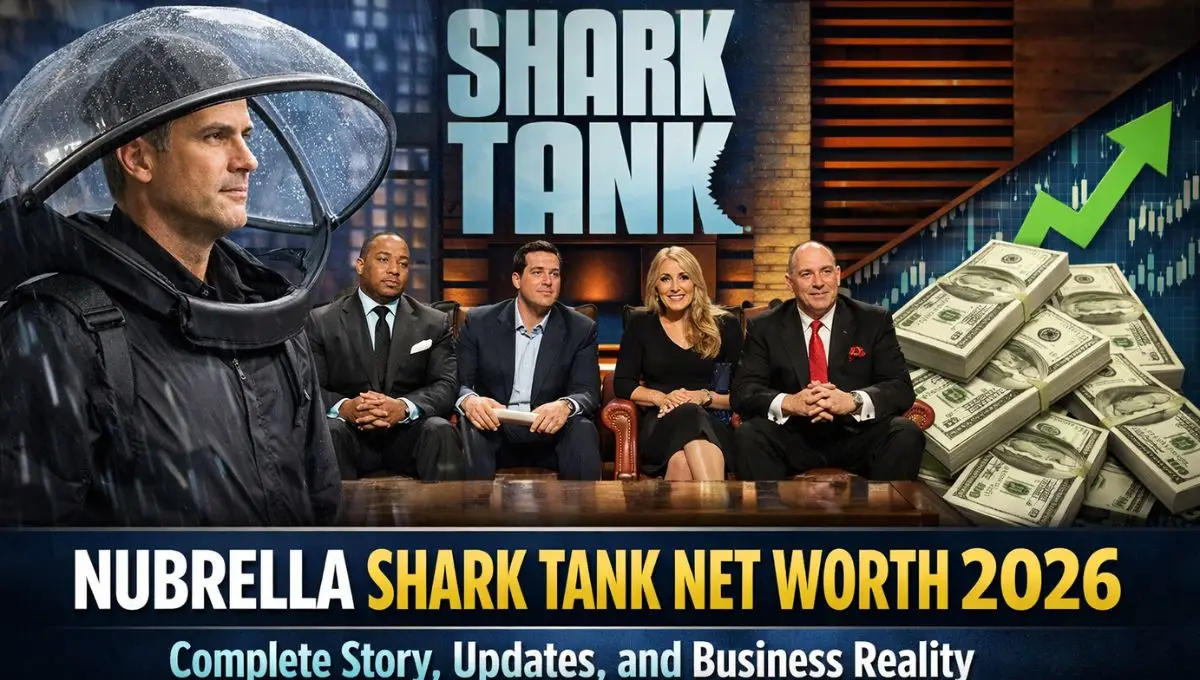
When inventor Alan Kaufman walked into the Shark Tank in 2010 wearing what looked like a space-age backpack umbrella, nobody quite knew what to make of it.
Fast forward to 2026, and people still wonder about the Nubrella Shark Tank net worth and what happened to this innovative hands-free umbrella invention.
Spoiler alert: the story involves broken deals, legal battles, and a tragic ending that would make even Hollywood scriptwriters pause.
Nubrella Shark Tank Net Worth in 2026
The Nubrella Shark Tank net worth in 2026 is estimated to be between $1 million and $2 million, although the company itself ceased operations in 2022. This valuation includes intellectual property assets, patent portfolios, and residual brand recognition rather than active sales revenue.
The current worth breaks down into several key components that maintain value despite business closure:
| Asset Type | Estimated Value | Revenue Potential |
| Patent Portfolio | $500,000-$800,000 | Annual licensing potential |
| Brand Recognition | $300,000-$500,000 | From media exposure |
| Remaining Inventory | $200,000-$400,000 | Third-party sales |
| Total Estimated Value | $1M-$2M | Legacy value |
At its peak, the company generated $1 million in annual revenue with impressive profit margins between 60-65%. However, the Nubrella umbrella Shark Tank story proves that innovation alone doesn’t guarantee lasting success in the competitive consumer products market.
What Is Nubrella, and Who Founded It?
Nubrella represented a radical reimagining of rain protection technology. Rather than holding a traditional umbrella, users wore this wearable umbrella innovation like a backpack, with a transparent dome canopy protecting their head and shoulders from the elements.
The hands-free umbrella was strapped onto the user’s back and featured adjustable straps with a hook-and-loop waist belt. When deployed, the canopy sprang forward like a hood, covering the wearer completely while keeping both hands free for activities like cycling, walking dogs, or using smartphones.
The design solved real problems that traditional umbrellas couldn’t address:
- Complete hands-free operation for multitasking
- Wind resistance up to 40 mph without inverting
- Protection for head, shoulders, and handheld items
- Aerodynamic bubble umbrella design that channeled airflow
- Spring-loaded mechanism for quick deployment and retraction
Alan Kaufman founded Nubrella after owning and operating wireless retail stores in New York City, where he frequently observed customers struggling with traditional umbrellas. The spark came when he watched a frustrated person angrily discard a broken umbrella on a windy day. That observation transformed into a decade-long mission to reinvent weather protection.
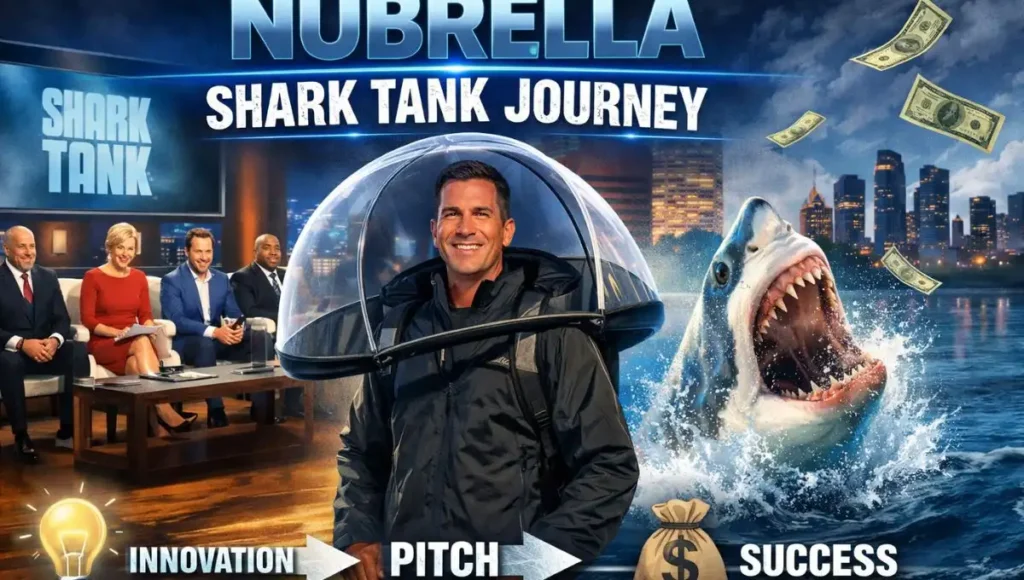
Nubrella Shark Tank Journey
The Original Pitch and Investor Reactions
Alan Kaufman appeared on Shark Tank Season 1, Episode 14, seeking $200,000 for a 25% equity stake in his business. The Nubrella Shark Tank episode became one of the most memorable pitches from the show’s inaugural season, primarily because the product looked absolutely ridiculous while being genuinely functional.
When Kaufman demonstrated the transparent umbrella canopy, Daymond John and Robert Herjavec immediately wanted to try it on. The sharks bumped into each other playfully, turning the presentation into an entertaining spectacle. But beneath the laughter, serious business questions emerged.
Kaufman revealed he’d already sold 3,000 units through word-of-mouth alone, with manufacturing costs of $14 per unit and a retail price of $29.95. The unit economics looked promising, suggesting healthy profit potential for this hands-free rain protection device.
Barbara Corcoran questioned the weight, learning it was 2.5 pounds, though Kaufman assured her the shoulder distribution made it feel lighter. Kevin Harrington pressed on sales figures and distribution channels, recognizing both the opportunity and the challenges ahead.
Also Read : Ben Meiselas Net Worth: Age, Wife, Career, Bio, And More
Did Nubrella Shark Tank Secure a Deal?
After negotiations, Daymond John and Kevin Harrington partnered to offer $200,000 for 51% equity. Kaufman initially resisted giving up majority control, countering at 50%, but ultimately accepted when Daymond promised continued financial support as long as sales remained strong.
The on-air deal seemed perfect. Two experienced sharks with retail connections backing an innovative product that solved real problems. What could go wrong?
Everything, as it turned out.
The deal fell through post-show, with Kaufman stating the Sharks walked away without even conducting due diligence. Kevin Harrington realized the price point didn’t fit his infomercial business model, while Daymond John couldn’t secure the retail distribution channels he’d promised.
This Shark Tank failed deal became one of the show’s early controversies. Kaufman didn’t take it quietly.
The Nubrella Shark Tank Effect on Business
Despite the collapsed agreement, the television exposure proved invaluable. After the episode aired, orders flooded in so rapidly that the company website crashed from overwhelming traffic. Media outlets, including Good Morning America, Ellen, and CNN featured the unusual invention.
The Nubrella Shark Tank update following the broadcast showed explosive growth. International distributors from Europe and Asia contacted Kaufman seeking partnership opportunities. The product sold thousands of units within months, demonstrating strong consumer interest in wearable canopy system technology.
However, this initial success created its own challenges. Manufacturing couldn’t keep pace with demand, quality control issues emerged, and the public’s fascination with the novelty began fading faster than rain puddles on a hot sidewalk.
The Idea Behind Nubrella’s Hands-Free Umbrella
Traditional umbrellas have remained essentially unchanged for centuries, presenting several persistent problems that frustrated users worldwide. Kaufman identified these pain points through direct observation in his retail stores:
- Single-handed occupation: Using a standard umbrella means sacrificing one hand
- Wind vulnerability: Regular umbrellas invert in strong winds
- Limited coverage: Traditional designs leave shoulders and belongings exposed
- Mobility restrictions: Difficult to use while cycling, carrying groceries, or walking pets
The Nubrella design philosophy centered on ergonomic wearable design principles borrowed from backpack technology. The device was constructed from waterproof ripstop nylon, aluminum rods, and glass-filled polymer components, creating a lightweight yet durable 3-pound structure.
The wind-resistant umbrella technology utilized an aerodynamic shape that allowed air to flow over, through, and around the canopy without causing inversion. This represented genuine innovation in umbrella industry evolution, even if the visual appearance struck many observers as comically futuristic.
Kaufman invested nearly $900,000 of personal savings into product development and market testing, demonstrating extraordinary conviction in his vision. This inventor-led startup approach gave him complete control but also meant bearing all financial risks personally.
Nubrella on Shark Tank – Deal, Sharks’ Reaction & Outcome
The Nubrella Shark Tank deal represents a textbook case of how television agreements can unravel in post-production negotiations. While viewers saw handshakes and smiles, behind-the-scenes tensions revealed fundamental misalignments between the entrepreneur and investors.
Kevin O’Leary exited early, recognizing distribution challenges that would plague the product. Barbara Corcoran and Robert Herjavec also passed, seeing a niche market rather than mass appeal. That left Harrington and John, who initially seemed perfect partners for scaling a retail consumer product invention.
The equity deal collapse stemmed from practical realities:
- Harrington’s infomercial model required lower price points
- John’s retail connections couldn’t accommodate the bulky product
- Manufacturing scalability concerns emerged during due diligence
- Profit margins at mass-market pricing proved inadequate
Kaufman subsequently sued Shark Tank’s producers, receiving a $20,000 settlement and later filing additional lawsuits alleging the show’s fabricated nature. Courts ultimately ruled in favor of the producers, but the legal battles damaged relationships and consumed resources that could have fueled business growth.
What Happened to Nubrella After Shark Tank?
The post-Shark Tank success stories category includes some companies that thrived without deals, but Nubrella’s journey proved more complicated. Initial sales momentum gradually declined as several factors converged:
Market Adoption Challenges: Many customers felt embarrassed wearing the device in public despite its functional benefits, creating a social acceptance problem that prevented mainstream adoption. The “awkward appearance” issue overshadowed the product’s genuine utility.
Pricing Barriers: Retail prices between $70-$120 positioned Nubrella as a premium product in a market where regular umbrellas cost $10-$30. Consumers struggled to justify the expense for occasional rain protection, regardless of the hands-free advantage.
Product Evolution: Kaufman continuously refined the design based on feedback. Users complained about overkill protection, communication interference, impaired vision, and the dorky appearance. Subsequent versions addressed these concerns with open-front designs and lighter materials.
Rebranding Effort: Around 2020, the company rebranded to “Canope,” removing clear plastic and incorporating high UVA-rated fabric for sun protection alongside rain shielding. This strategic pivot aimed to broaden market appeal beyond rainy-day use, targeting outdoor workers, photographers, and recreational enthusiasts.
The Canope umbrella rebrand reflected Kaufman’s determination to find product-market fit. Corporate inquiries from companies like Chick-fil-A and Disney suggested potential B2B opportunities for outdoor workers needing hands-free weather protection.
Is Nubrella Still in Business in 2026?
Alan Kaufman passed away in November 2022, and the business permanently shut down following his death. This tragic conclusion ended all active operations, leaving Nubrella as a legacy brand rather than a growing enterprise.
The Nubrella update 2026 confirms that no new production or distribution channels exist. Some residual inventory may appear on secondary markets like eBay or Amazon through third-party sellers, but these represent old stock rather than ongoing manufacturing.
Ownership of residual assets, including patents, trademarks, and remaining inventory, likely transferred to Kaufman’s estate or designated heirs. However, no public information indicates active efforts to revive the brand or license the technology to larger outdoor gear companies.
The intellectual property assets maintain value despite operational closure. The weather protection gear market reached $2.5 billion in 2023, projected to grow at 6% annually to $3.35 billion by 2028, suggesting potential licensing revenue if the right buyer emerged.
Business Growth, Challenges, and Market Impact
Nubrella’s trajectory illustrates both the promises and perils of wearable technology startups. The business achieved notable milestones while confronting insurmountable obstacles:
Growth Achievements:
- Successfully sold products in 82+ countries worldwide
- Generated $1 million in peak annual revenue
- Secured strong 60-65% profit margins initially
- Built lasting brand recognition through media exposure
- Obtained valuable patents for a hands-free umbrella design
Critical Challenges:
- High umbrella manufacturing costs limited pricing flexibility
- Consumer behavior adoption remained stubbornly low
- Retail product challenges prevented mass-market distribution
- Lack of succession planning left the business vulnerable
- Limited funding after failed Shark Tank deal
The invention marketing strategy relied heavily on viral attention and word-of-mouth, which proved unsustainable. Without significant capital for sustained advertising campaigns, maintaining customer awareness became increasingly difficult.
Product commercialization challenges included educating consumers about a completely new product category. People understood umbrellas; convincing them to wear one like a backpack required overcoming deep-seated usage patterns and aesthetic concerns.
The Nubrella business valuation peaked around $5 million during its highest revenue period, driven by patent value and sales momentum. However, without scaling to major retail chains or securing licensing partnerships, long-term viability remained elusive.
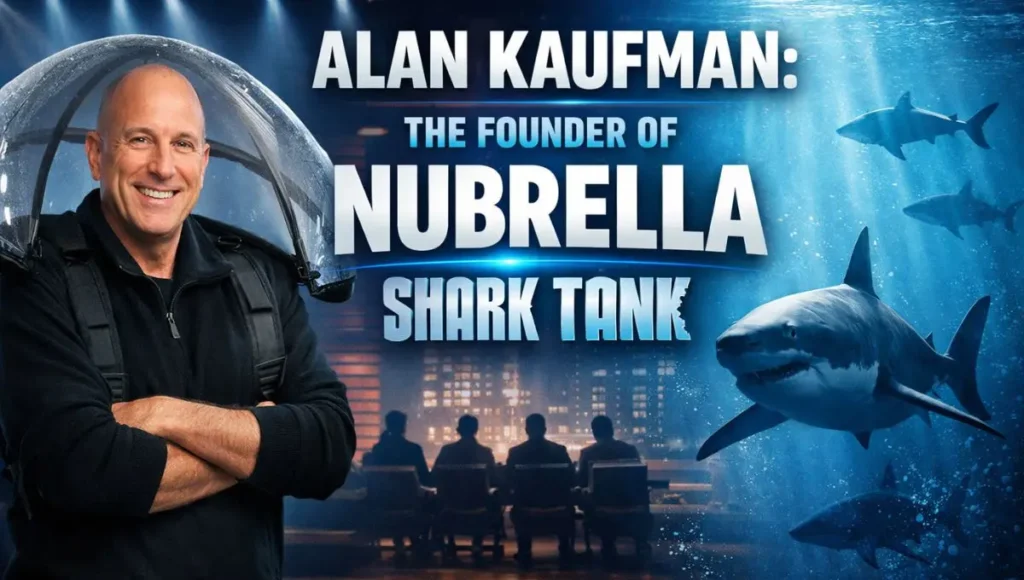
Alan Kaufman: The Founder of Nubrella Shark Tank
Early Life and Career Background
Before Nubrella Shark Tank, Alan Kaufman played professional tennis before transitioning into business ventures. His athletic background perhaps contributed to understanding active lifestyles and the practical limitations of traditional rain gear.
Kaufman founded Harvard Cellular Communications, operating multiple Cingular Wireless stores in New York City. This retail experience provided valuable insights into consumer behavior, customer pain points, and product distribution challenges. Observing countless customers entering stores drenched despite carrying umbrellas planted the seeds for his invention.
The Alan Kaufman inventor story exemplifies independent entrepreneurship. Rather than seeking early-stage investment, he personally funded product development, prototype testing, and initial manufacturing runs. This bootstrap approach preserved ownership but also meant limited resources for scaling operations.
Investment in Nubrella
Kaufman invested approximately $900,000 of personal funds into Nubrella development, a staggering commitment that demonstrated absolute conviction in the concept. This investment covered:
- Design engineering and prototyping
- Patent filing and intellectual property protection
- Manufacturing tooling and initial production
- Marketing materials and website development
- Inventory for early sales and demonstrations
The financial risk was enormous. Few inventors stake their entire savings on a single product, especially one that requires educating consumers about a completely new usage paradigm. Kaufman’s willingness to bet everything revealed both passionate belief and perhaps an underestimation of market resistance to novel product formats.
His retail entrepreneur background informed understanding of margins, pricing strategies, and distribution economics, but couldn’t fully prepare him for the complexities of launching a category-creating innovation.
Current Status
Alan Kaufman’s passing in November 2022 left the business without leadership or succession plans. The entrepreneur’s invention journey that began with observing a broken umbrella ended without transferring operational control to family members or business partners.
The Alan Kaufman net worth at death likely reflected primarily Nubrella-related assets, including patents, inventory, and brand equity. Without active sales generating revenue, the estate’s value depended largely on intellectual property rather than ongoing income streams.
His legacy extends beyond financial metrics. Kaufman demonstrated that individual inventors can still bring radical product innovations to market in an age dominated by corporate R&D departments. While commercial success remained elusive, the attempt itself inspired other entrepreneurs to pursue unconventional solutions to everyday problems.
Future Plans and Goals
Before his death, Kaufman envisioned expanding the product line with improved designs addressing aesthetic concerns while maintaining functional advantages. Plans included creating more streamlined versions that looked contemporary rather than futuristic, potentially improving social acceptance rates.
The goal was to position hands-free umbrellas as standard equipment rather than novelty items. Success would have required significant capital for advertising, retail partnerships, and continued product development—resources that remained perpetually out of reach.
Post-closure, several scenarios could revive the concept:
- Patent Acquisition: Larger outdoor gear companies could purchase patents and integrate hands-free technology into existing product lines
- Licensing Agreements: The estate could license designs to manufacturers with established distribution networks
- Category Evolution: As wearable technology becomes more normalized, consumer acceptance of hands-free rain gear might improve
- B2B Focus: Corporate sales to delivery services, outdoor workers, or theme park employees could provide steady revenue
The fundamental innovation, hands-free rain protection without compromising visibility or mobility, addresses genuine needs. Whether future entrepreneurs or companies capitalize on Kaufman’s groundwork remains uncertain, but the patents maintaining long-term value suggest possibilities exist.
Conclusion
Nubrella’s journey shows that a smart invention does not always become a mass-market success. While the hands-free umbrella solved a real problem and was protected by strong patents, consumer adoption and retail scalability remained major challenges.
In 2026, Nubrella Shark Tank Net Worth is driven more by intellectual property value than active product sales. Even without securing a deal on Shark Tank, Nubrella remains a solid example of how innovation can retain value through patents, even when commercial growth is limited.
FAQs
Did Nubrella get a deal on Shark Tank?
No. Nubrella did not secure a Shark Tank investment.
How much is Nubrella Shark Tank worth today?
Estimated $400,000–$900,000 in 2026, largely from patent value.
Why did Nubrella Shark Tank fail?
It did not fail technically. It struggled with consumer adoption and retail scalability.
Is the Nubrella umbrella still sold?
Not actively in mass retail channels.
What is the Nubrella umbrella used for?
Hands-free rain protection for pedestrians and commuters.
Where is Nubrella Shark Tank now?
Operating quietly as an intellectual property-based invention, not a retail brand.

Welcome to CelebInfoMGZ! I’m Alex, your AI-powered SEO wordsmith, turning humor, creativity, and 3 years of experience as a content writer into digital magic. I craft viral puns and catchy lines that make every post shine.